
For homeowners in Valdosta, GA, a properly functioning heating and cooling system is important throughout the year. If your HVAC system is not cooling or heating properly, several factors could be responsible, ranging from a dirty air filter or thermostat issue to refrigerant problems, electrical failures, or aging equipment.
Wright's Heating and Air Conditioning helps homeowners identify heating and cooling problems and determine the right solution for their HVAC systems. Here are some of the most common reasons your system may not be keeping your home comfortable.
Why Is My HVAC System Not Cooling or Heating Properly?
An HVAC system may not cool or heat properly because of a dirty air filter, incorrect thermostat settings, restricted airflow, blocked outdoor equipment, refrigerant issues, electrical problems, ductwork leaks, or mechanical failures. The right solution depends on the specific problem affecting your system.
Some basic issues can be checked by a homeowner, while other problems require professional HVAC troubleshooting and repair.
1. Your HVAC Air Filter Is Dirty
A dirty air filter is one of the simplest problems that can affect HVAC performance. The filter is designed to capture dust and airborne particles before they enter the system. Over time, it can become clogged and restrict the amount of air moving through your HVAC equipment.
Restricted airflow can cause:
- Weak airflow from vents
- Longer heating or cooling cycles
- Uneven temperatures throughout the home
- Increased strain on the system
- Higher energy use
- Reduced comfort
If your HVAC system is running but the airflow from your vents seems weaker than usual, check the air filter. Replacing a dirty filter may improve airflow, but if the problem continues, there may be another issue that requires professional attention.
2. Your Thermostat May Be Causing the Problem
Sometimes the HVAC equipment is working properly, but the thermostat is not communicating the correct settings to the system.
Start by checking that your thermostat is set to the appropriate mode. For cooling, it should be set to “cool,” while heating requires the “heat” setting. Also make sure the desired temperature is set correctly.
Other thermostat problems may include:
- Dead batteries
- Incorrect temperature readings
- Faulty sensors
- Poor thermostat placement
- Wiring problems
- Communication issues with newer HVAC systems
If the thermostat appears to be working but your home still does not reach the desired temperature, professional troubleshooting can determine whether the thermostat or another HVAC component is responsible.
3. Restricted Airflow Can Prevent Proper Heating and Cooling
Your HVAC system needs adequate airflow to distribute conditioned air throughout your home. If airflow is restricted, your system may run for long periods without providing the comfort you expect.
Common causes of restricted airflow include:
- Clogged air filters
- Blocked return vents
- Closed supply registers
- Dirty blower components
- Obstructions around vents
- Damaged or poorly connected ductwork
Check that furniture, curtains, rugs, or other objects are not blocking your vents and returns. If airflow remains weak, an HVAC professional can inspect the system and determine where the restriction is occurring.
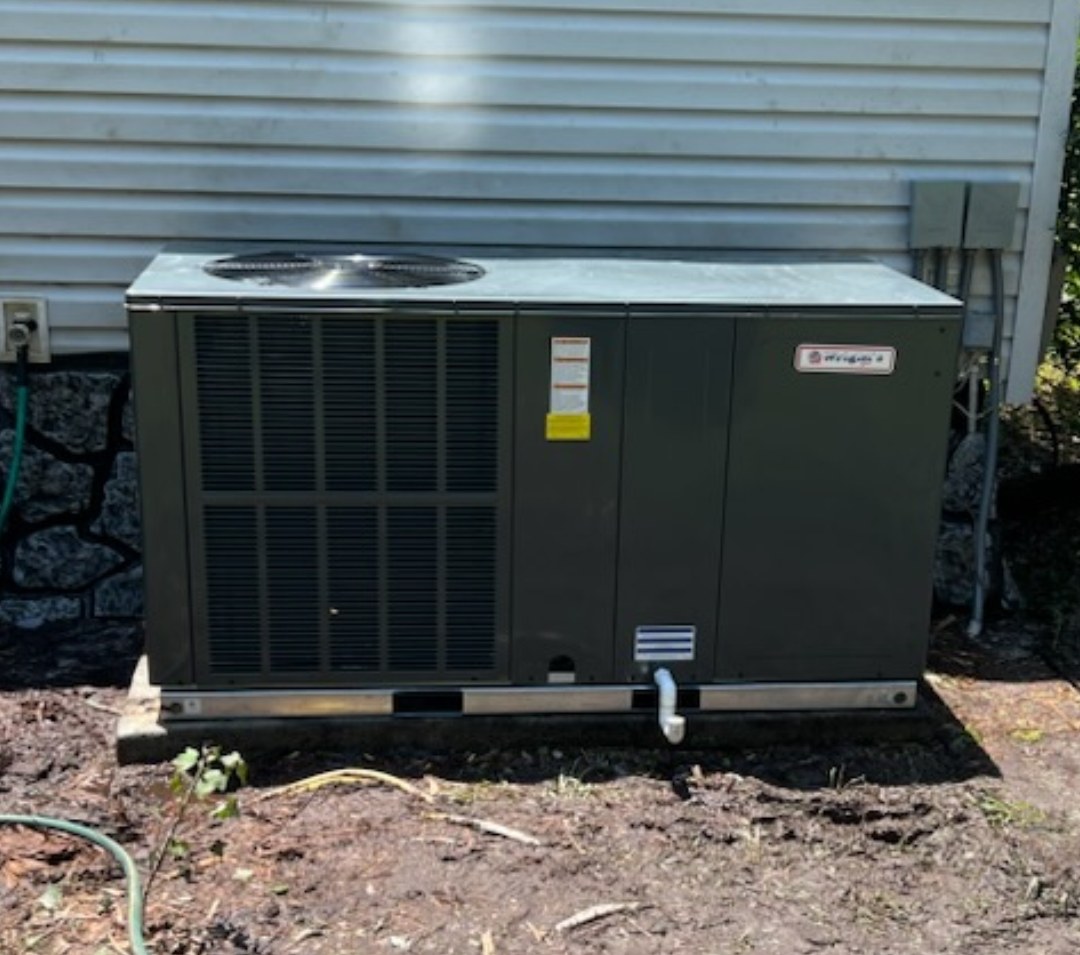
4. The Outdoor Unit May Be Dirty or Blocked
Your outdoor HVAC equipment needs sufficient airflow to operate effectively. Leaves, grass, dirt, and other debris can accumulate around the outdoor unit and interfere with airflow.
A heavily obstructed outdoor unit may have difficulty transferring heat properly, which can affect cooling performance and put additional strain on the system.
Keep the area around the outdoor unit clear of obvious debris and vegetation. However, do not remove electrical panels or attempt to repair internal components yourself. HVAC equipment contains electrical and mechanical components that can be dangerous to handle without the proper training.
5. A Refrigerant Problem May Be Affecting Your Air Conditioner
If your air conditioner is running but your home is not getting cool, a refrigerant-related problem may be one possible cause.
Refrigerant is essential to the cooling process. If the system has a leak or another refrigerant issue, it may not be able to remove heat from your home effectively.
Potential signs of a refrigerant problem include:
- Warm air coming from the vents
- Longer cooling cycles
- Poor cooling performance
- Ice forming on the indoor coil or refrigerant lines
- Unusual HVAC operation
Refrigerant problems should be diagnosed and addressed by a qualified HVAC professional. Simply adding refrigerant without determining why the system is low may not resolve the underlying problem.
If your system is showing these symptoms, professional HVAC repair can help identify the source of the problem and determine the appropriate solution.
6. An Electrical Problem Could Be Preventing Proper Operation
HVAC systems rely on several electrical components to operate. If one of these components fails, the system may not start, may stop unexpectedly, or may operate without producing the expected heating or cooling.
Potential electrical issues include:
- Tripped breakers
- Failed capacitors
- Faulty wiring
- Contactor problems
- Motor failures
- Control board problems
If your HVAC system repeatedly trips a breaker or you notice burning or electrical odors, turn off the system and contact an HVAC professional. Do not attempt to troubleshoot electrical components yourself.
7. Your Ductwork Could Be Leaking or Damaged
Your HVAC system can produce conditioned air properly, but problems with the ductwork can prevent that air from reaching the rooms where you need it.
Leaky, disconnected, damaged, or poorly insulated ducts may contribute to:
- Uneven temperatures
- Weak airflow
- Rooms that are difficult to heat or cool
- Longer HVAC run times
- Reduced efficiency
- Higher energy costs
If one part of your home consistently feels much hotter or colder than the rest, the ductwork may be worth inspecting. If damaged or outdated ductwork needs to be replaced, professional air duct installation can help improve the delivery of conditioned air throughout the home.
8. Your HVAC System May Be Getting Too Old
HVAC equipment does not last forever. As a system ages, components can wear out, and performance may gradually decline.
An older HVAC system may experience:
- More frequent repairs
- Reduced efficiency
- Uneven heating and cooling
- Longer run times
- Difficulty maintaining the thermostat setting
- Increasing repair costs
Age alone does not necessarily mean that you need a new system. A professional evaluation can help determine whether repairing the existing equipment or considering replacement is the more practical option.
9. Your HVAC System May Not Be Properly Sized
HVAC sizing can also affect comfort and performance.
An oversized system may cool or heat a home too quickly and shut off before completing a proper cycle. This can contribute to short cycling, uneven temperatures, and poor humidity control.
An undersized system may struggle to keep up with demand. It may run for long periods while still failing to reach the desired indoor temperature.
Proper HVAC sizing considers factors such as the home's size, insulation, layout, windows, ductwork, and other characteristics. Simply installing a larger system is not always the best solution.
What Should I Check If My HVAC Is Not Cooling or Heating?
Before calling an HVAC professional, there are a few basic things you can safely check.
Quick HVAC troubleshooting checklist:
- Check the thermostat mode and temperature setting.
- Replace the air filter if it is dirty.
- Make sure supply vents are open.
- Check that return vents are not blocked.
- Look around the outdoor unit for obvious debris or vegetation.
- Check whether the HVAC system has power.
- Listen for unusual noises.
- Look for visible ice or water around the equipment.
- Pay attention to unusual or burning odors.
If these basic checks do not solve the problem, professional HVAC troubleshooting can help identify the underlying cause.
Avoid opening electrical panels, handling refrigerant, or attempting mechanical repairs yourself.
When Should I Call an HVAC Professional in Valdosta, GA?
You should contact an HVAC professional if your system continues running without properly cooling or heating your home, repeatedly shuts down, produces unusual noises or odors, has weak airflow, develops ice, or experiences electrical problems.
Professional HVAC service is especially important when you notice:
- Your AC is blowing warm air.
- Your heater is blowing cool air.
- The system runs constantly.
- The HVAC system frequently turns on and off.
- Certain rooms remain uncomfortable.
- Airflow is unusually weak.
- Ice is forming on the system.
- Water is leaking around the indoor equipment.
- The breaker repeatedly trips.
- You smell burning or electrical odors.
- Your system requires frequent repairs.
Addressing problems early may help prevent a relatively small HVAC issue from developing into a more significant repair.
How Can Regular HVAC Maintenance Prevent Heating and Cooling Problems?
Regular HVAC maintenance can help keep heating and cooling equipment operating reliably and efficiently. Maintenance also allows a technician to identify worn or malfunctioning components before they cause a major breakdown.
Depending on your system, routine maintenance may include:
- Inspecting HVAC components
- Checking electrical connections
- Evaluating airflow
- Inspecting coils
- Checking system operation
- Examining refrigerant-related components
- Inspecting blower components
- Checking the thermostat
- Evaluating ductwork
- Recommending necessary repairs
Homeowners should also keep up with routine tasks such as replacing air filters and keeping vents and outdoor equipment clear.
Scheduling regular HVAC maintenance can help keep your system operating properly and may allow developing issues to be identified before they turn into unexpected breakdowns.
HVAC Repair Services in Valdosta, GA
When your HVAC system is not keeping your home comfortable, identifying the cause is the first step toward finding the right solution. Wright's Heating and Air Conditioning provides heating and cooling services for homeowners in Valdosta, GA, and surrounding communities.
Whether your air conditioner is not cooling, your heater is not producing enough warmth, or your HVAC system is behaving differently than usual, professional troubleshooting can help determine what is happening.
Rather than guessing at the cause or replacing equipment unnecessarily, a qualified HVAC professional can evaluate the system and recommend the appropriate next step.
Frequently Asked Questions About HVAC Problems
Why is my AC running but not cooling my house?
An AC that runs without adequately cooling the home may have a dirty filter, restricted airflow, a thermostat problem, a blocked outdoor unit, a refrigerant issue, or a mechanical problem. If basic checks do not resolve the issue, professional AC troubleshooting can identify the cause.
Why is my heater running but my house is still cold?
A heater may run without adequately warming the home because of restricted airflow, thermostat problems, ductwork issues, equipment malfunctions, improper sizing, or other heating-system problems. A professional inspection can determine why the system is struggling to maintain the desired temperature.
Why is my HVAC system blowing lukewarm air?
Lukewarm air can result from incorrect thermostat settings, airflow restrictions, refrigerant problems, electrical issues, or a malfunctioning HVAC component. The exact cause needs to be determined through proper troubleshooting.
Why does my HVAC system run constantly?
An HVAC system may run continuously because of extreme outdoor temperatures, restricted airflow, ductwork problems, refrigerant issues, an improperly sized system, or equipment that is no longer operating efficiently. If the system cannot reach the thermostat setting, professional service may be needed.
How do I know if my HVAC needs repair or replacement?
A repair may be appropriate when the problem is isolated, and the equipment is otherwise in good condition. Replacement may be worth considering when an HVAC system is older, requires frequent repairs, has declining efficiency, or needs a major repair. A professional evaluation can help you compare your options.
How often should I have my HVAC system serviced?
Follow the maintenance recommendations for your specific HVAC equipment and consider regular professional inspections for both heating and cooling systems. Routine maintenance can help identify developing problems and keep the system operating as reliably as possible.